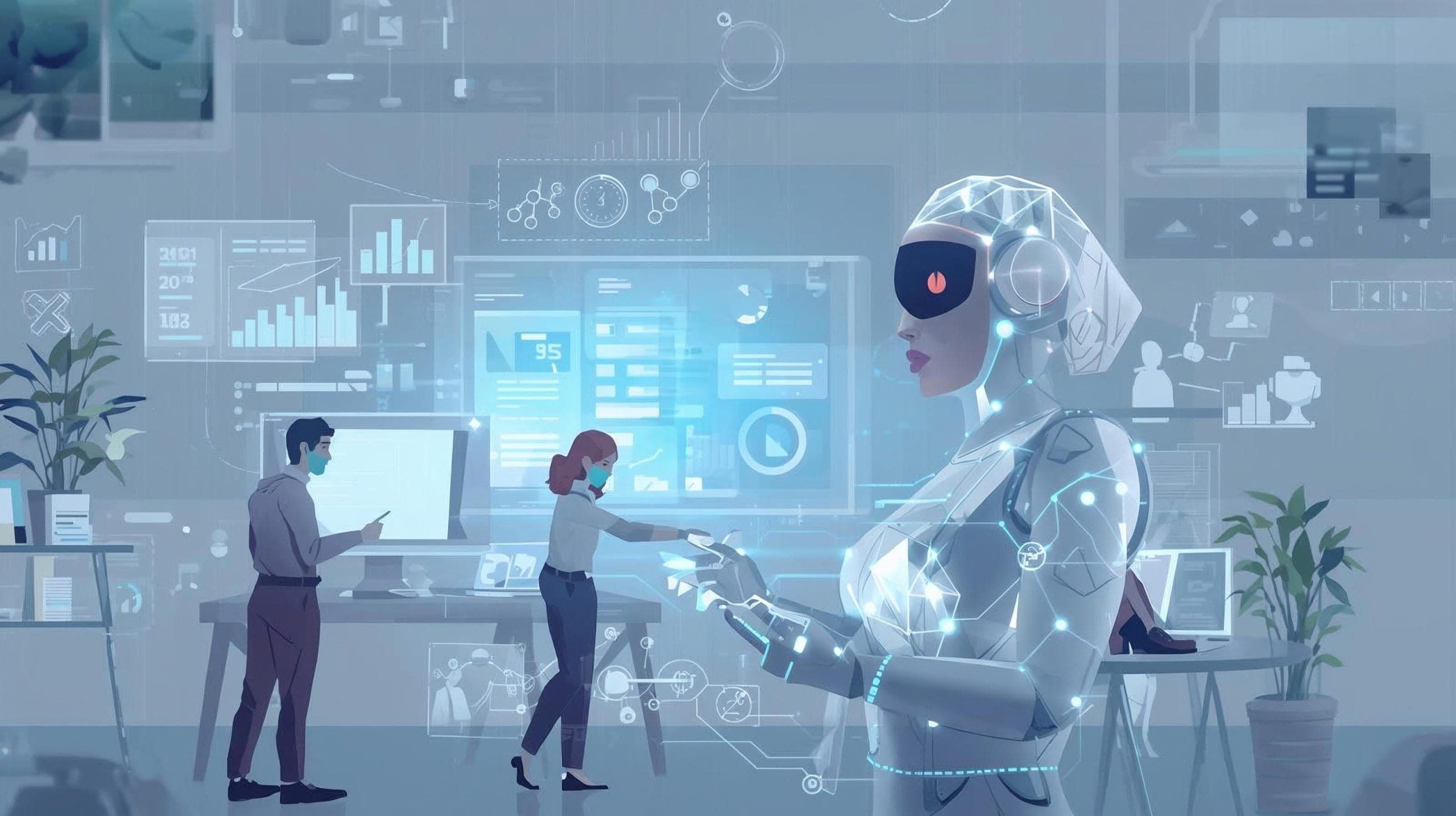
Claude’s new agentic abilities transform AI from a basic chatbot into a proactive digital coworker.
For years, the relationship between humans and artificial intelligence has been strictly conversational. You type a prompt into a box, and the AI replies with text or code. It is a dialogue, effective but passive.
That dynamic just shifted dramatically. With the release of Claude’s agentic abilities, Anthropic has introduced a model that does not simply talk about work; it can actually perform it.
This development represents a fundamental change in how we interact with software. We are moving away from chatbots that offer advice and toward digital agents that can navigate interfaces, execute complex coding sequences, and operate computers much like a human would.
The Shift from Chat to Action
To understand why Claude’s agentic abilities matter, we must look at the limitations of traditional Large Language Models (LLMs).
Until now, if you asked an AI to “book a flight” or “deploy this code,” it would generate the necessary text or instructions. However, the human user still had to take that text, open a browser, click the buttons, or paste the code into a terminal. The AI was the navigator, but the human was always the driver.
The updated Claude 3.5 Sonnet model changes this friction. It possesses “computer use” capabilities, allowing it to interpret screenshots, move a cursor, click buttons, and type into text fields. It can look at a screen and understand the context of what it sees. This is not just better processing power; it is a step toward autonomy.
Coding with a Co-Pilot, Not Just a Tutor
The most immediate impact of Claude’s agentic abilities is felt in software development. Coding is rarely just about writing syntax. It involves managing environments, debugging across multiple files, running tests, and navigating complex integrated development environments (IDEs).
Previously, developers used AI to generate snippets of functions. Now, an agentic model can potentially take a request like “fix the bug in the payment API” and autonomously navigate the file directory, identify the error, propose the fix, and run the test suite to verify it works.
This reduces context switching. Developers often lose focus when moving between the “thinking” and “doing” phases. By offloading the mechanical navigation and execution to the AI, engineers can remain in the architectural mindset for longer periods.
The Human in the Loop
While Claude’s agentic abilities are impressive, they introduce a new layer of responsibility for the user. When an AI produces text, errors are usually obvious and harmless until used. When an AI has control of a cursor and an API, the risk profile changes. An agent that misinterprets a command could accidentally delete a database or send an unfinished email.
Anthropic has been transparent about these risks, noting that the technology is still in its early stages. The “computer use” feature is currently experimental and can be cumbersome at times. It might miss a button or scroll past relevant information.
Therefore, the role of the human shifts from “operator” to “supervisor.” We are no longer driving the car, but we must keep our hands near the steering wheel.
What This Means for the Future of Work
The introduction of Claude’s agentic abilities signals the arrival of the “Large Action Model” (LAM) era. We are transitioning from tools that help us think to tools that help us act.
For businesses, this suggests a future where workflows are increasingly automated at the interface level. Legacy software that lacks modern APIs could suddenly become automatable because an AI agent can “see” and “click” the interface just like an employee would.
For the average user, it hints at a future where our computers become less like typewriters and more like executive assistants. You might eventually tell your computer to “organize my downloads folder based on date and file type,” and the agent will handle the clicking and dragging while you grab a coffee.
A New Layer of Collaboration
Technology is most useful when it removes friction between intent and outcome. Claude’s agentic abilities are a significant leap toward removing that friction.
By allowing AI to interact with the digital world directly, we are not just getting faster answers. We are gaining the capacity to turn ideas into execution with unprecedented speed.
The technology is young, and the guardrails are necessary, but the path forward is clear: the AI of the future will not just chat; it will work.
About the Author