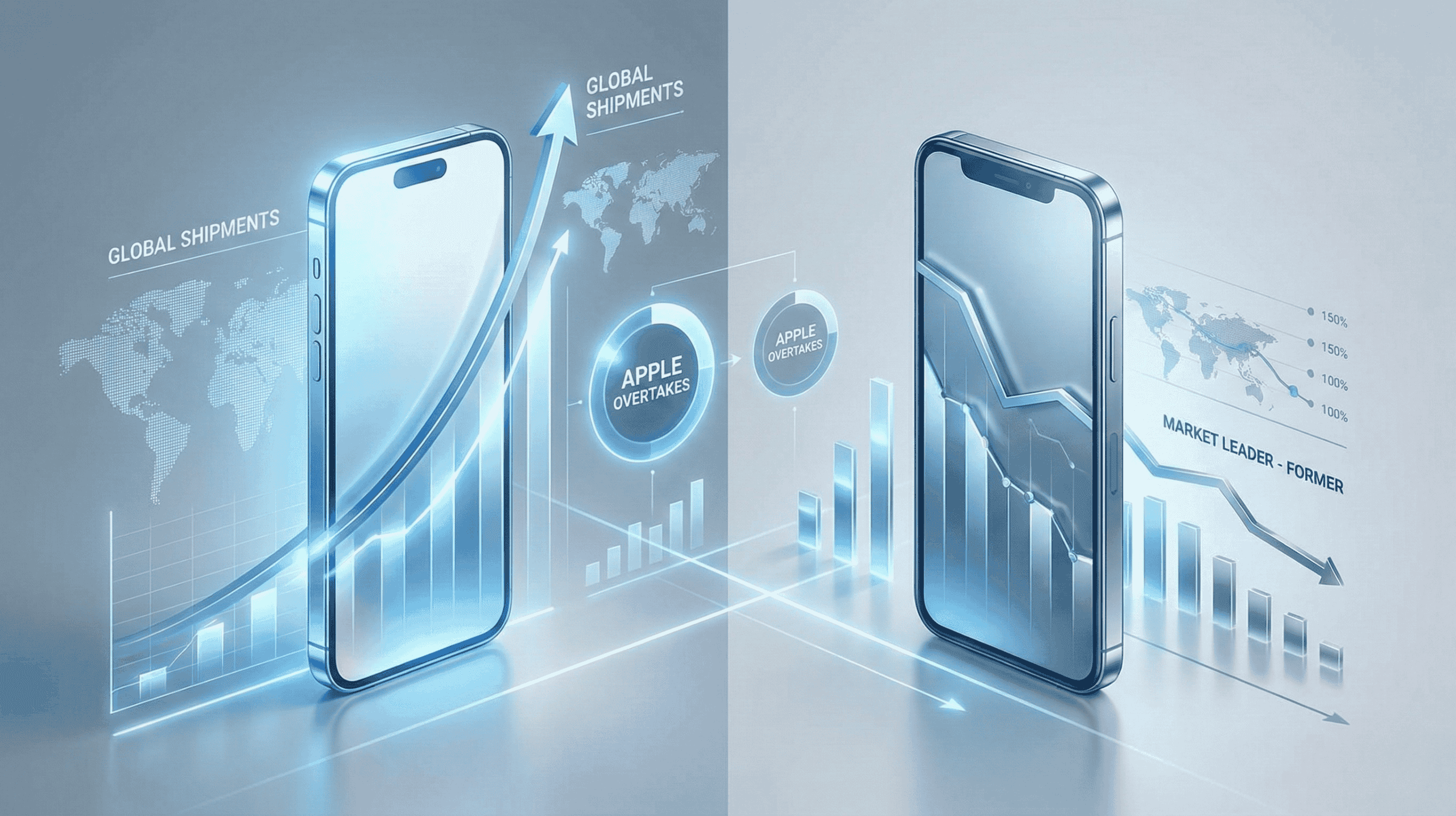
Apple has officially passed Samsung, becoming the new global leader in smartphone shipments.
For over a decade, the global smartphone market has followed a predictable rhythm. Samsung sits at the top by volume, shipping a massive array of devices ranging from budget-friendly options to premium flagships.
Meanwhile, Apple dominates in profitability but usually sits in second place for total units shipped. That long-standing dynamic has officially shifted.
Following the launch of the iPhone 17, data indicate that Apple overtakes Samsung in annual global shipments for the first time in 14 years. This is not just a win for a single company; it is a signal that consumer priorities are fundamentally changing.
The Shift: Premium Over Volume
To understand why this matters, we have to look at how these companies operate.
Samsung has traditionally played the volume game. They flood the market with dozens of models annually to ensure there is a Galaxy phone for every budget, from entry-level buyers in emerging markets to power users in major cities.
Apple, conversely, releases a handful of premium devices once a year. The fact that Apple overtakes Samsung now suggests that the “premium” strategy is winning the volume war.
Despite economic headwinds globally, consumers are increasingly opting for high-end devices that last longer. The iPhone 17 has accelerated a trend known as “premiumization,” where users are willing to pay more upfront for a device they intend to keep for three or four years.
Why It Matters: The Ecosystem Lock-In
This leadership change represents more than just bragging rights. It highlights the immense power of the ecosystem. When a consumer buys an iPhone, they are rarely buying just a phone. They are buying an entry ticket into a suite of services, including iCloud, Apple Pay, and the App Store.
As Apple secures the top spot in hardware shipments, they are simultaneously expanding their user base for services. This creates a compounding effect.
A user who switches from Android to iOS to buy an iPhone 17 is statistically less likely to switch back than a user moving between Android brands. This “stickiness” means that Apple’s growth in market share is likely to be more permanent and stable than the fluctuations seen among Android competitors.
The Android Fragmentation Problem
For Samsung and the broader Android market, this is a wake-up call. The Android ecosystem is vast but fragmented. While Samsung remains the undisputed leader of the Android world, they face pressure from two sides.
On the premium end, Apple is eating into their market share. On the budget end, aggressive competitors like Xiaomi and Transsion are squeezing margins with ultra-low-cost devices.
This squeeze puts Samsung in a difficult strategic position. They must innovate enough to stop premium users from defecting to the iPhone while keeping prices low enough to fend off budget rivals.
Apple does not have this problem. They focus almost exclusively on the top of the market, which happens to be the only segment that is consistently growing.
Looking Ahead: A New Era of Competition
As Apple overtakes Samsung, the industry will be forced to react. We can expect Samsung to double down on form factor innovation, pushing foldable phones like the Z Fold and Z Flip series even harder to differentiate themselves from the standard glass rectangle of the iPhone.
For the consumer, this intense competition is good news. It forces Samsung to make their mid-range phones better to keep users loyal. It puts pressure on Apple to ensure the iPhone remains worth its high price tag.
We are entering a new era where market dominance is not about how many cheap phones you can sell, but how much value you can convince a user to pay for.
The smartphone wars are far from over, but the battlefield has changed. Volume is no longer the only king; value is. And right now, Apple has managed to capture both.
About the Author