


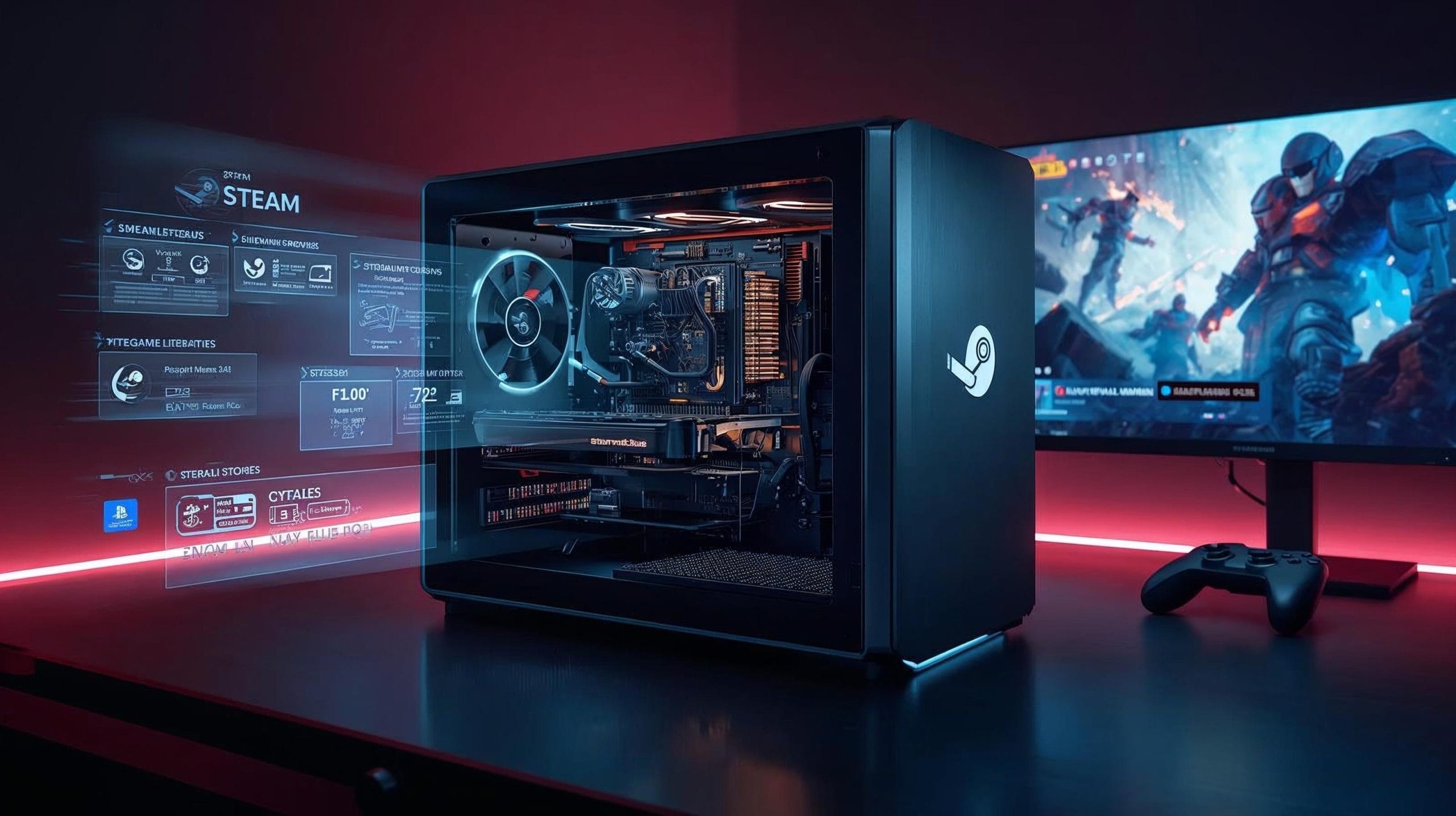
The Valve Steam Machine gaming console represents another bold experiment from one of gaming’s most influential companies. It enters a market where boundaries between consoles and PCs are already fading.
The timing is significant, as players increasingly expect the simplicity of a console with the open possibilities of a desktop rig. Valve’s answer is a hybrid device meant to fuse those worlds together in one sleek machine.
The Idea Behind the Steam Machine
A decade ago, Valve tried something similar with the original Steam Machines. These were pre-built PCs running SteamOS, aimed at bringing PC gaming into the living room.
The idea was ahead of its time, but it never fully took off. Today, the context is very different. Cloud gaming, handheld PCs like the Steam Deck, and cross-platform libraries have matured.
This new iteration of the Steam Machine builds on those lessons to deliver something both familiar and transformative.
At its core, the new Steam Machine positions itself as a high-performance console powered by PC-grade hardware. It is expected to feature AMD Ryzen processors paired with Radeon graphics options ranging from entry-level to high-end variants.
Valve’s design philosophy centers on modularity, allowing different configurations similar to buying a gaming PC while keeping plug-and-play convenience.
Design and Features That Matter
Valve’s approach focuses on openness. The Steam Machine runs the latest SteamOS version, built on Linux, supporting thousands of native titles and enabling cloud gaming through services integrated directly into the Steam client.
Users can also install Windows if they prefer broader compatibility. Unlike traditional consoles, there are no locked ecosystems or forced subscriptions.
The expected hardware lineup caters to multiple tiers. Reports suggest models capable of 1080p at 120 frames per second and higher-end versions that support 4K gaming with ray tracing enabled. Users will likely find NVMe SSD storage, efficient thermal design, and USB-C expansion options as standard.
The console’s compact form factor and quiet cooling system make it suitable for both desk setups and living room entertainment centers.
Connectivity will play a central role in its appeal. Wi-Fi 6E, Bluetooth 5.3, and DisplayPort over USB-C are part of the rumored specs. Integration with the Steam Controller 2.0 and compatibility with standard PC peripherals give users flexibility unmatched by consoles like the PlayStation 5 or Xbox Series X.
Performance and Gaming Experience
Early performance benchmarks, though not officially confirmed, indicate that the Steam Machine could rival mid- to high-tier gaming PCs. Valve’s engineers aim for efficiency through custom firmware that optimizes DirectX and Vulkan support, reducing latency and improving frame pacing.
Combined with Proton, Valve’s compatibility layer, even Windows-only titles should run smoothly on SteamOS.
Beyond raw performance, the system promises a streamlined user experience. Quick-boot interfaces, automatic cloud saves, and mobile app connections for remote library management all signal Valve’s intent to create a unified gaming environment.
Every detail, from interface speed to driver updates, reflects the company’s growing expertise through the Steam Deck project.
Price and Launch Date Expectations
While Valve has not officially revealed launch details, industry watchers anticipate a release window in late 2025 or early 2026. The expected price range could start near $499 for the base configuration, scaling to around $899 for a fully equipped model.
That pricing would position it between modern consoles and entry-level gaming PCs, offering performance per dollar that could attract both console owners and PC builders.
Valve’s strategy follows a clear logic: create a bridge product that lowers the barrier to PC gaming while emphasizing player freedom. No exclusives, no walled gardens, just access to the vast Steam ecosystem and hardware that grows with user needs.
Why It Matters Now
The renewed Steam Machine arrives at a moment of convergence. Cloud streaming is pressuring console hardware, gaming laptops remain expensive, and gamers want flexibility without endless maintenance.
Valve’s position as a platform holder gives it a unique advantage: it owns the largest distribution network for PC games and can integrate that ecosystem directly into its hardware.
If successful, the Valve Steam Machine gaming console could redefine what a “console” means in the next generation. It would also signal a shift in market expectations, where openness and modularity replace proprietary control as the defining features of gaming hardware.
The question now is not whether Valve can build great machines; it can, but whether the company can sustain player trust and developer confidence to make the platform endure. The history of gaming is filled with great hardware that arrived before its time. Valve seems determined not to repeat that mistake.
About the Author

